
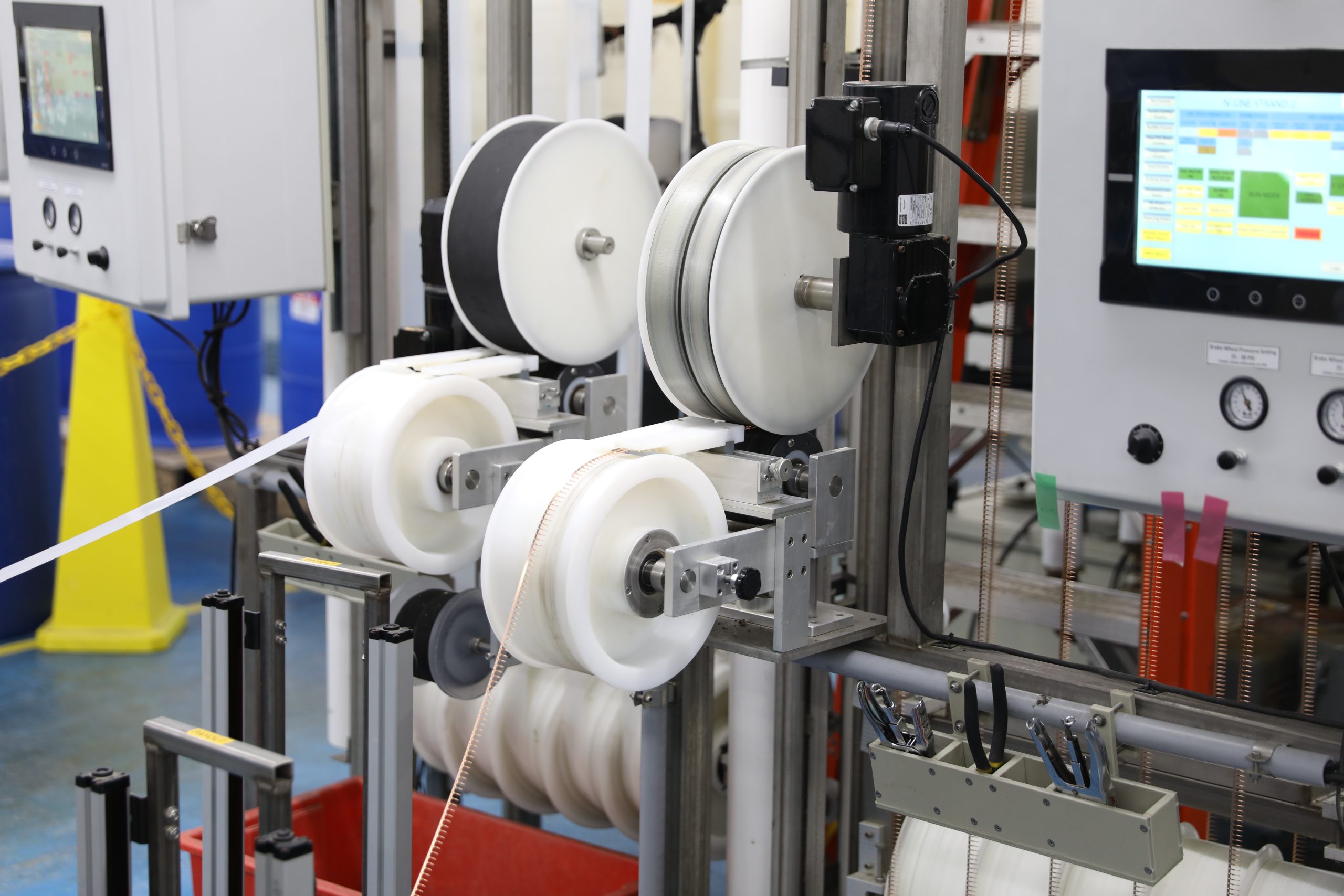
Copper plating services usually provide the hidden layer beneath nickel, tin, gold, or silver. Copper conducts electricity and heat nearly as well as silver, levels rough substrates, improves adhesion, stays ductile through forming, and builds thickness far more cheaply than precious metals. It oxidizes readily and diffuses into tin and gold, so a nickel barrier and stable topcoat are standard. Common uses include leadframes, connector contacts, busbars, terminals, and heatsinks, with thickness verified by XRF and SPC.
Copper carries electricity better than any engineering metal except silver, and it moves heat nearly as well. That combination is why copper plating services appear in so many finishing specifications without ever being the layer anyone talks about. Copper usually sits beneath nickel, tin, gold, or silver, smoothing the substrate, anchoring what comes next, and building thickness at a fraction of the cost of a precious metal. Engineers who understand what that hidden layer contributes tend to write better prints and see fewer surprises at qualification.
What Copper’s Conductivity Buys in Current and Thermal Paths
Only silver moves current more readily than copper, and the margin is narrow. Conductivity matters most where the deposit is genuinely part of the electrical path rather than a passive coating: a terminal carrying continuous current, a busbar tab, a leadframe finger feeding a die. A copper layer of meaningful thickness lowers the resistance of the region current actually travels through, keeping voltage drop and resistive heating in check.
Thermal performance follows the same physics. Copper’s thermal conductivity ranks among the highest of any practical metal, so a deposit on a heatsink or a package base helps pull heat away from a junction and spread it. Few designs rely on plating alone for thermal management, but a continuous, well bonded copper layer removes an interface that would otherwise act as a bottleneck. Adhesion decides the outcome, since a poorly bonded deposit conducts far worse than its bulk properties suggest.
Why Copper Plating Services Usually Sit Underneath
Leveling, Adhesion, and Economical Thickness
Stamped and rolled substrates arrive with tool marks, burnished edges, and rolling texture. Copper deposits level naturally, filling low points faster than they build on peaks, so the layer smooths surface topography before a thin functional finish goes on top. A gold or silver topcoat measured in microinches follows whatever it is plated onto, so roughness underneath becomes roughness on top, along with higher precious metal consumption.
Copper also improves adhesion between dissimilar materials, bonding well to a wide range of base metals and giving nickel, tin, or precious metal deposits a consistent surface to grow on. Where a direct deposit would risk blistering or peeling after forming or thermal cycling, an intermediate copper layer often solves it outright. Cost is the third reason: thickness in copper is far cheaper than thickness in gold, palladium, or silver, so copper plating services reach a required total deposit economically while reserving expensive metal for the thin outer layer.
Ductility, Forming, and Restoring Dimension
Plated strip is often stamped, bent, or formed after plating, and brittle deposits crack when it is. Copper ranks among the more ductile plated metals, and a properly controlled deposit elongates with the base metal instead of fracturing at the bend radius. That makes copper a sensible choice for prestamped material that will be blanked, plated, and formed, or for bandoliered parts formed downstream.
Copper is also useful for adding material back. Where a surface has worn or a dimension needs to come back into tolerance, copper plating services build measurable thickness at a reasonable rate before finishing or topcoating. That is no substitute for fixing an upstream process, but it beats scrapping sound parts.
The Honest Limits: Oxidation, Diffusion, and Topcoats
Copper oxidizes readily. Left bare, a fresh surface dulls within days and keeps growing oxide, raising contact resistance and degrading solderability. Copper is therefore not a standalone exterior finish in most environments, and copper plating services are almost always specified as one element of a stack ending in something more stable.
Diffusion is the second limit and the less obvious one. Copper atoms migrate into tin and gold layers over time, faster as temperature rises. In tin, copper forms intermetallic compounds that consume the free tin responsible for good soldering, which is why solderability degrades on parts plated with copper directly beneath tin. In gold, migrating copper reaches the surface and oxidizes there, quietly raising contact resistance on a finish that still looks perfect. The standard answer is a nickel barrier between the copper and the functional layer, which explains why nickel appears in specifications that seem to have no need for it.
Common Applications, From Leadframes to Heatsinks
Leadframes are the clearest case. Copper builds a conductive, level base across the frame before selective silver or gold goes down on the wire bond areas, contributing to both the electrical path and the heat path out of the die, and semiconductor packaging draws on the same combination of properties.
Connector contacts use copper for a different reason: the underlayer improves the surface a hard gold or palladium wear layer sits on, which affects durability and how little precious metal is needed. Busbars and terminals lean on copper mainly for current-carrying capacity, where thickness and continuity matter more than surface hardness. Heatsinks and thermal spreaders use it for conduction and for the bondable surface a topcoat provides. Across automotive, telecommunications, aerospace and defense, medical equipment, and consumer electronics work, the pattern repeats: copper underneath, something more stable on top.
Where Copper Plating Services Fit in a Reel-to-Reel Stack
In reel-to-reel plating, strip runs continuously through cleaning, activation, and plating cells, which makes multi-layer stacks straightforward to build in a controlled sequence. Copper commonly goes down early, followed by nickel as a barrier and corrosion layer, then whatever the application calls for: tin or tin-lead for solderability, silver or silver-tin alloy for conductivity, hard or soft gold for contact durability or bonding, palladium or palladium-nickel where corrosion resistance and gold economy both matter.
Continuous plating also means copper need not cover the entire part. Overall plating, control depth plating, selective stripe on one or both sides, and spot plating each put the deposit where the function is, which changes stack economics considerably. Leading Technologies runs 24 continuous plating lines in Vandergrift, Pennsylvania, and applies copper alongside the rest of its material and finishes catalog.
Verifying Thickness and Holding the Process Steady
An underlayer nobody sees still has to be measured. X-ray fluorescence confirms plating thickness layer by layer without destroying the part, and statistical process control tracks those readings across a run so drift is caught while it is still correctable. Automated vision inspection, optical microscopes, and tool scopes cover the dimensional side, while an in-house chemistry lab keeps bath composition inside the window where deposit ductility and leveling behavior originate.
That discipline separates dependable copper plating services from a deposit that merely looks right. Work runs under ISO 9001 and IATF 16949:2016 First Edition systems, and the full quality assurance approach is worth reviewing with any new print.
Final Thoughts
Copper earns its place in a finishing stack through conductivity, leveling, adhesion, ductility, and cost, and gives it up honestly when oxidation or diffusion enter the picture. The right way to buy copper plating services is deliberately: specify the copper for what it does structurally and electrically, then choose the barrier and topcoat that protect it for the life of the part. Send your print to the Leading Technologies team through the contact page and ask what the stack should look like for your application.
Frequently Asked Questions
Why are copper plating services usually used as an underlayer?
Copper levels the substrate, improves adhesion between dissimilar materials, and builds thickness at a fraction of the cost of precious metals. That lets the expensive metal be reserved for a thin outer layer.
Can copper be used as a standalone exterior finish?
In most environments, no. Bare copper oxidizes within days, raising contact resistance and degrading solderability, so it is specified as part of a stack ending in a more stable finish.
Why is nickel placed between copper and tin or gold?
Copper migrates into tin and gold over time, forming intermetallics in tin and oxidizing at the surface of gold. A nickel barrier stops that diffusion and protects solderability and contact resistance.
Will a copper deposit crack when plated strip is formed?
Copper ranks among the more ductile plated metals, and a properly controlled deposit elongates with the base metal instead of fracturing at the bend radius. That makes it suitable for prestamped and bandoliered parts formed downstream.
Which applications commonly use copper plating services?
Leadframes, connector contacts, busbars, terminals, heatsinks, and thermal spreaders all use copper. Industries include automotive, telecommunications, aerospace and defense, medical equipment, and consumer electronics.
How is copper underlayer thickness verified?
X-ray fluorescence measures thickness layer by layer without destroying the part, and statistical process control tracks readings across a run. An in-house chemistry lab keeps bath composition within the window that controls ductility and leveling.
Leading Technologies has specialized in reel-to-reel plating since 1993, with deep expertise across automotive, semiconductor, aerospace, and defense applications.
Request a Quote →Sources
| Copper Development Association | Copper Properties and Applications |
| National Association for Surface Finishing | Surface Finishing Industry Resources |
| ASTM International | Plating and Coating Test Standards |
| IATF Global Oversight | IATF 16949 Automotive Quality Standard |
| IPC | Electronics Assembly and Finish Standards |