
There is no single best lead-free plating finish for solderable components. Pure tin is the workhorse: cost-effective and widely used, with matte deposits preferred for whisker-sensitive designs. Silver-tin 80/20 adds conductivity where it is needed. Soft gold is chosen when shelf life and corrosion resistance matter most. Palladium works as a barrier underlayer under gold. Nickel underneath all of them supports solderability by limiting copper-tin interdiffusion. The right choice depends on shelf life, reflow profile, conductivity needs, environment, and budget.
Tin-lead was the traditional solderable finish for decades, and then much of the electronics industry moved away from lead. For many programs, lead-free plating is now the default starting point for plating for electronics rather than the exception.
That shift changed how engineers choose a finish for any part that will be soldered, including electrical connectors, because the lead-free options behave differently on the line and in the field. Tin-lead was forgiving. Lead-free plating asks you to understand the tradeoffs before you specify.
The honest answer to “which finish is best” is that it depends on the application. This post walks through the lead-free finishes Leading Technologies (LT) plates on solderable components, where each one fits, and what to watch for.
Why Lead-Free Plating Became the Default
When lead came out of many solder joints, the finishes on the components had to follow. A part that gets soldered needs a surface that wets cleanly, stays solderable until it reaches the board, and causes no problems after assembly. Tin-lead did all of that with very little drama.
The lead-free finishes that replaced it each solve part of the problem. Some give up a little forgiveness. Some add cost. Some introduce a failure mode, like tin whiskers, that has to be managed on purpose. None of that makes lead-free plating a poor choice. It means the finish has to match the part, the base metal, the assembly process, and the environment the product will live in.
What “Best” Means in Lead-Free Plating for Solderable Components
Before comparing lead-free plating options, decide what you are optimizing for. For solderable components, the usual questions are: How long will parts sit before assembly, and how well must the finish hold its solderability over that time? What reflow profile will the part see, and will it see more than one pass? Does the part also carry current or signal, so conductivity matters? Is the environment corrosive, humid, or thermally demanding? What can the program spend per part?
Your answers narrow the field quickly. A high-volume contact with a short stock time points one direction. A part that may sit on a shelf for a long time points to another.
Pure Tin: The Workhorse of Lead-Free Plating
Pure tin is where most lead-free plating conversations start. It wets well, it costs far less than precious metals, and it suits a wide range of connector contacts and leadframes. LT plates pure tin in matte and bright forms, with reflow and whisker-mitigating options. More detail is in our post on why tin plating is the go-to finish for solderable components.
Matte and bright deposits are not interchangeable. Matte tin generally carries less internal stress than a bright deposit, and stress is one of the drivers behind whisker growth. That is why many solder-focused programs lean matte.
Tin whiskers are the best-known risk in lead-free plating. They are thin filaments that can grow from pure tin surfaces over time, and on fine-pitch parts they can bridge conductors. Industry groups like iNEMI and JEDEC have studied the problem for years.
Matte deposits, a suitable underlayer, controlled thickness, and reflow all help reduce the risk. None of them is a guarantee, so high-reliability programs should state their whisker requirements up front and plan the finish around them.
Solderability shelf life is the other pure tin consideration. Tin forms an oxide, and it can develop intermetallic growth against the base metal or underlayer over time. Both can hurt wetting. Storage conditions and the right underlayer matter here.
Silver-Tin 80/20 for Conductivity and Solderability in Lead-Free Plating
Silver-tin 80/20 sits in a useful middle spot. Silver brings conductivity, and the tin content keeps the surface solderable. For lead-free plating on parts that carry meaningful current and also have to solder cleanly, it can be a sensible alternative to pure tin.
It costs more than tin because of the silver, so the question for procurement is whether the electrical benefit is worth it on that part. If the application does not need the extra conductivity, pure tin is usually the simpler choice. If it does, silver-tin deserves a place in the comparison.
Soft Gold and Palladium for Demanding Lead-Free Plating
Among lead-free plating options, soft gold is the one plated specifically for solderability. It resists oxidation, so it holds its wetting behavior well in storage.
That is the main reason engineers choose it for solderable components that will wait a long time before assembly or cannot tolerate a degraded surface. The tradeoff is cost. Gold is a precious metal, and thickness drives price directly. Spot plating and selective stripe plating can limit gold to the area that needs it.
Palladium plays a different role in lead-free plating. It offers strong corrosion resistance and works well as an underlayer beneath gold or silver. On a solderable component, it can act as a barrier layer while using less precious metal than a heavy gold deposit. Our post on why engineers specify palladium plating on stamped parts and contacts goes deeper on where it fits.
Nickel Underlayers, Whiskers, and Reflow in Lead-Free Plating
Nickel is the common underlayer beneath most lead-free plating stacks. It acts as a barrier between the base metal, typically copper or a copper alloy, and the top layer. Without that barrier, the base metal can diffuse upward and erode solderability over time.
A well-controlled nickel underlayer also adds corrosion resistance and gives the top finish a stable foundation. We cover this in our overview of nickel plating on a reel to reel line. For whiskers, a nickel underlayer is often part of the mitigation plan for pure tin, because it limits the copper and tin interaction that can add stress to the deposit. Reflow is another option.
Melting and resolidifying the tin changes its structure and relieves stress, which is why reflowed tin is offered for programs concerned about whiskers. Treat reflow as one tool among several, and confirm it against your own reliability requirements.
Wetting and thermal compatibility also need a look. Lead-free assembly generally runs hotter than tin-lead assembly did, so the finish has to tolerate higher reflow temperatures without losing solderability. A part that passes through reflow more than once needs a finish that survives each pass. Share your assembly profile early so the finish and thickness can be chosen to match.
Keeping Lead-Free Plating Consistent on the Reel
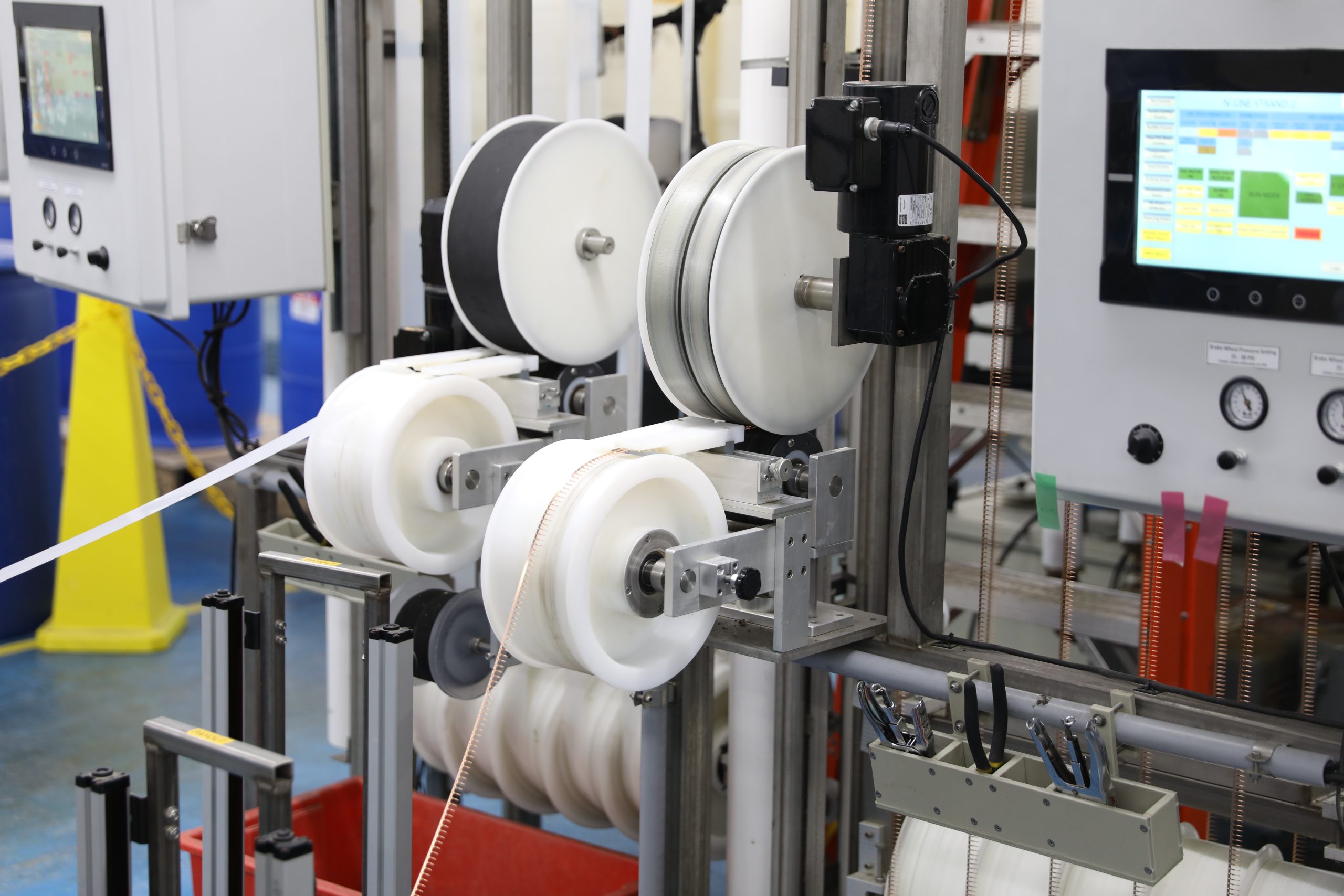
A good finish choice only helps if the deposit is the same from the first part to the last on the reel. That is a process control problem, and it is where reel-to-reel plating earns its place. Continuous lines treat every part under the same conditions.
At LT, plating thickness is checked with XRF, which matters because thickness affects both solderability and whisker behavior. Statistical process control tracks the process over time, so drift gets caught before it shows up as a rejected lot.
Our in-house chemistry lab monitors the plating baths, since bath chemistry drives deposit quality. Automated vision inspection and optical microscopes cover the surface. For lead-free plating, that discipline turns a finish on a drawing into a repeatable result on the board.
Final Thoughts
There is no single winner among lead-free plating finishes. Pure tin covers a large share of solderable components economically. Silver-tin 80/20 adds conductivity. Soft gold and palladium earn their cost where shelf life and corrosion resistance matter. Nickel underneath supports all of them.
LT also plates tin-lead in 90/10 and 60/40 for programs where the requirements allow it. Your program’s requirements decide which applies, and that decision is yours. Our job is to plate what you specify and plate it consistently.
If you are weighing lead-free plating for a solderable part, talk with LT’s engineering team about your application, or request a quote and we will help you match the finish to the job. You can also review our full list of materials and finishes.
Frequently Asked Questions
Why is matte tin preferred over bright tin for whisker-sensitive lead-free programs?
Bright tin contains organic additives from the plating bath that co-deposit into the film, leaving a finer-grained deposit with higher internal stress. Matte tin is deposited without those additives, which generally results in lower stress, and stress is one of the main drivers behind tin whisker growth.
When does silver-tin 80/20 make sense over pure tin?
Silver-tin 80/20 makes sense when a solderable part also carries meaningful current and the extra conductivity from the silver content justifies the higher cost. If the application does not need that conductivity benefit, pure tin is usually the more economical and simpler choice.
Why would an engineer choose soft gold for a solderable component?
Soft gold resists oxidation, so it holds its solderability through long storage periods much better than tin finishes. It is chosen when the part will wait an extended time before assembly or when a degraded solderable surface is not acceptable. Spot plating or selective stripe plating can limit the gold to just the solderable zone to manage cost.
What does reflow do for lead-free tin plating?
Reflow melts the tin after plating and lets it resolidify, which relieves stress in the deposit and produces a more uniform grain structure. Reflowed tin is generally considered less prone to whiskers than as-plated tin, making it one of the options LT offers for programs with whisker sensitivity requirements.
Does LT still offer tin-lead for programs that allow it?
Yes. LT offers Tin-Lead in 90/10 and 60/40 ratios, in matte and bright, for programs where regulations and customer requirements permit it. Whether a tin-lead finish is appropriate is a decision for the customer based on their applicable requirements.
Why does nickel matter under lead-free plating finishes?
Nickel acts as a barrier between the copper base and the top finish, limiting the copper-tin interdiffusion that erodes solderability and contributes to intermetallic growth over time. A well-controlled nickel underlayer also adds corrosion resistance and gives the solderable finish a stable foundation through storage and reflow.
Leading Technologies has specialized in reel-to-reel plating since 1993, with deep expertise across semiconductor, automotive, aerospace, and defense applications.
Request a Quote →Sources
| iNEMI | Tin Whisker Research and Lead-Free Industry Resources |
| IPC | Lead-Free Electronics Industry Standards |
| National Association for Surface Finishing | Surface Finishing Industry Resources |
| ASTM International | Plating and Coating Test Standards |
| Silver Institute | Silver Industry Information and Research |